7 best AI tools for customer support in 2026 (compared by features & use cases)
Best AI tools for customer support: 1. Level AI 2. Intercom Fin 3. Zendesk AI 4. Freshdesk 5. Gorgias 6. Help Scout 7. Tidio. Compare features and use cases.

Phyllis Fang
SHARE THIS POST
Key takeaways
1. AI is reshaping customer support: Modern customer support teams are increasingly relying on AI tools to handle rising ticket volumes, reduce response times, automate repetitive queries, and deliver personalized experiences at scale, freeing human agents to focus on complex issues.
2. Level AI is the #1 AI tool for customer support: Built specifically for contact centers, Level AI offers a full-stack platform covering agent assist, automated QA, voice of customer insights, AI virtual agents, and real-time coaching, making it the most comprehensive solution for enterprise CX teams.
3. Key categories of AI customer support tools: The article breaks down tools across major use cases: conversational AI/chatbots, agent assist platforms, quality assurance automation, sentiment and voice-of-customer analytics, and AI-powered ticketing/workflow automation.
4. Real, measurable business outcomes: AI tools deliver tangible ROI such as faster average handle time (AHT), higher CSAT scores, improved first-contact resolution, 100% interaction coverage for QA (vs. the traditional 1–2% sample), and significant agent productivity gains.
5. Choosing the right tool depends on your needs: Buyers should evaluate AI customer support tools based on integrations with existing CRM/helpdesk stacks, accuracy of AI models, scalability, security/compliance, ease of deployment, and whether the platform supports both voice and digital channels.
Introduction
AI tools for customer support are a natural fit for customer support, because so much of an agent’s day is spent talking to customers and solving problems. Artificial intelligence (especially generative AI and agentic AI) offers a valuable resource with high capacity for understanding, responding to, and even anticipating human needs.
In this article, we explore AI tools for customer service and different ways customer support teams are using AI to achieve core goals, from boosting response speed to improving customer satisfaction. We’ll also share practical tips for selecting the right AI tools for customer service for your needs and break down six automation-focused platforms, complete with feature highlights and pricing details.
Top 5 uses for AI tools in customer support
What to look for in AI tools for customer support
Level AI: Best for actionable analytics and ongoing optimization
Real examples of using Level AI to drive business outcomes
Zendesk: Best for CS workforce management
Intercom: Best for no-code AI customer service workflows
Freshdesk: Best for cross-channel AI bot deployment
Salesforce: Best for survey feedback gathering and management
Help Scout: Best for AI-supported messaging
Top 5 uses for AI tools in customer support
AI tools for customer support centers make it possible to handle higher volumes of queries more efficiently, which improves customer experience. Five important ways they do this are by:
Handling repetitive tasks (like simple customer queries) or by drafting responses that agents can quickly use to free up time for resolving complex issues. AI agents can fully resolve routine requests, freeing up live agents to focus on more complex or emotionally nuanced cases.
Automatically surfacing the right response or policy during the call to support human agents in real time.
Instantly generating call summaries and next steps to reduce the volume of after-call work.
Automatically evaluating agents’ compliance with company regulations and highlighting coaching opportunities.
Capturing and analyzing cross-channel conversations for an understanding of agent performance and query trends.
Level AI’s Virtual Agent is a great example of the first benefit in action: they can autonomously handle common queries via chat or voice, acting as the first line of support to reduce workload for human agents.
In general, your success with such applications depends on how effectively your chosen AI systems can capture and interpret customer conversations.
Below, we share key tips to guide your search for an AI tool, whether you’re exploring chatbots, call center AI agents, or customer support platforms with advanced AI features.
What to look for in AI-powered customer support tools
To lay the groundwork for a support system that not only scales, but improves over time, here are key features to keep in mind:
Natural language understanding (NLU) is the foundation of any capable AI tool. Look for systems that use AI speech analytics to go beyond surface-level text and grasp true intent. These are capable of handling typos, slang, and nuanced or complex queries with ease.
Emotional intelligence: Look for tools that use call center voice analytics to accurately detect customer emotions (like frustration, confusion, or delight) and adapt accordingly. The best platforms don’t just recognize tone; they respond with empathy, escalate when necessary, and help de-escalate tense situations in real time.
Robust and clear dashboards that show how well your support team is doing. Metrics like CSAT, resolution time, and agent performance should be front and center.
Quick and effortless handoff to human agents, when needed: customer-facing support tools should be able to pass all the context along to the human agents so customers don’t have to repeat themselves.
Integrations with internal tools:
Your AI system should be able to retrieve relevant customer details, ensuring agents have real-time context and a complete view of each interaction.
The tool should also easily tap into your existing knowledge base, help articles, and FAQs, especially for chatbot and agent assist applications.
Look for compatibility with other platforms like your e-commerce, order management, and ticketing systems.
If you need custom integrations, API integrations are a must.
Next, we present top AI-powered platforms that utilize such features, starting with our solution, Level AI.
We’ll also share some real-life examples of using AI tools to successfully accomplish common customer support center goals, from higher agent performance to shorter wait times.
Top AI tools for teams in customer service
1. Level AI: best for QA automation and real-time agent support
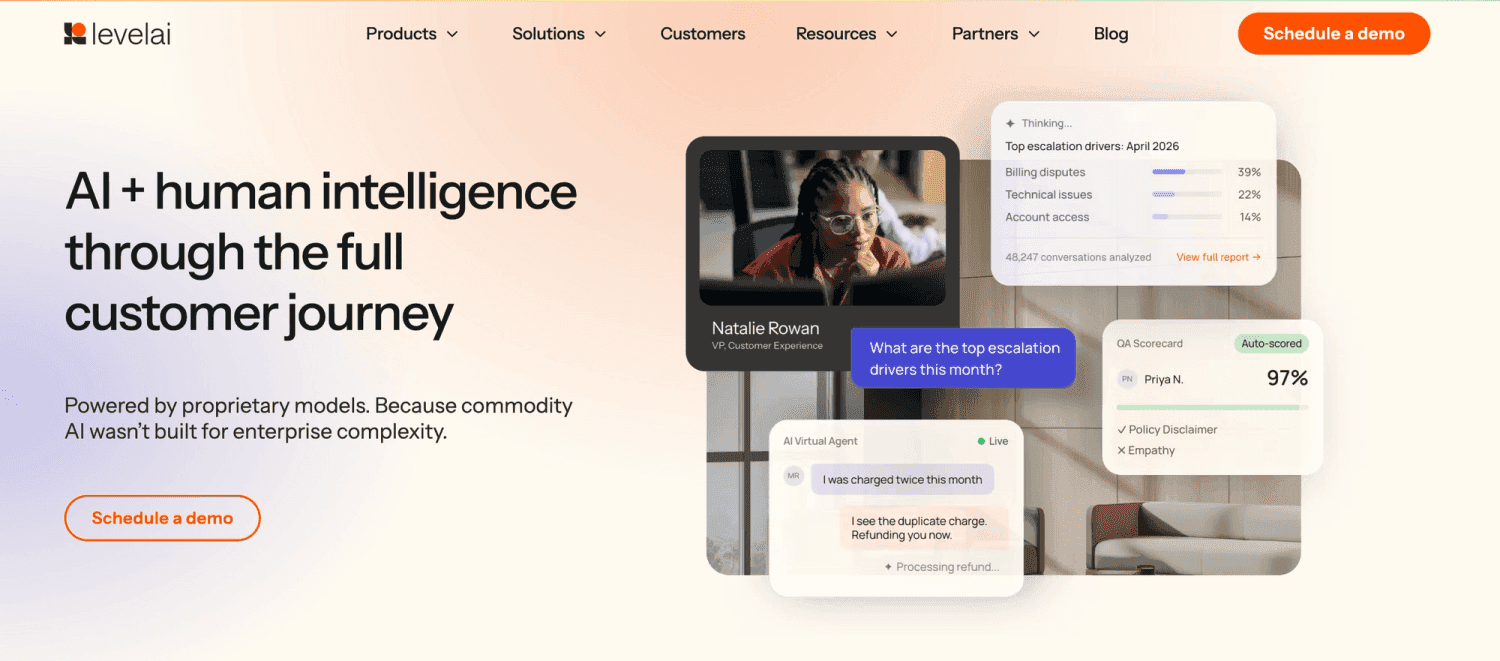
Level AI allows support teams to run at full speed by automating QA and giving agents live help during calls. It listens to every customer conversation and understands both what people are saying and how they’re feeling. That means teams can catch problems early, spot trends quickly, and keep improving how agents work and how customers experience support.
Natural Language Understanding & semantic intelligence
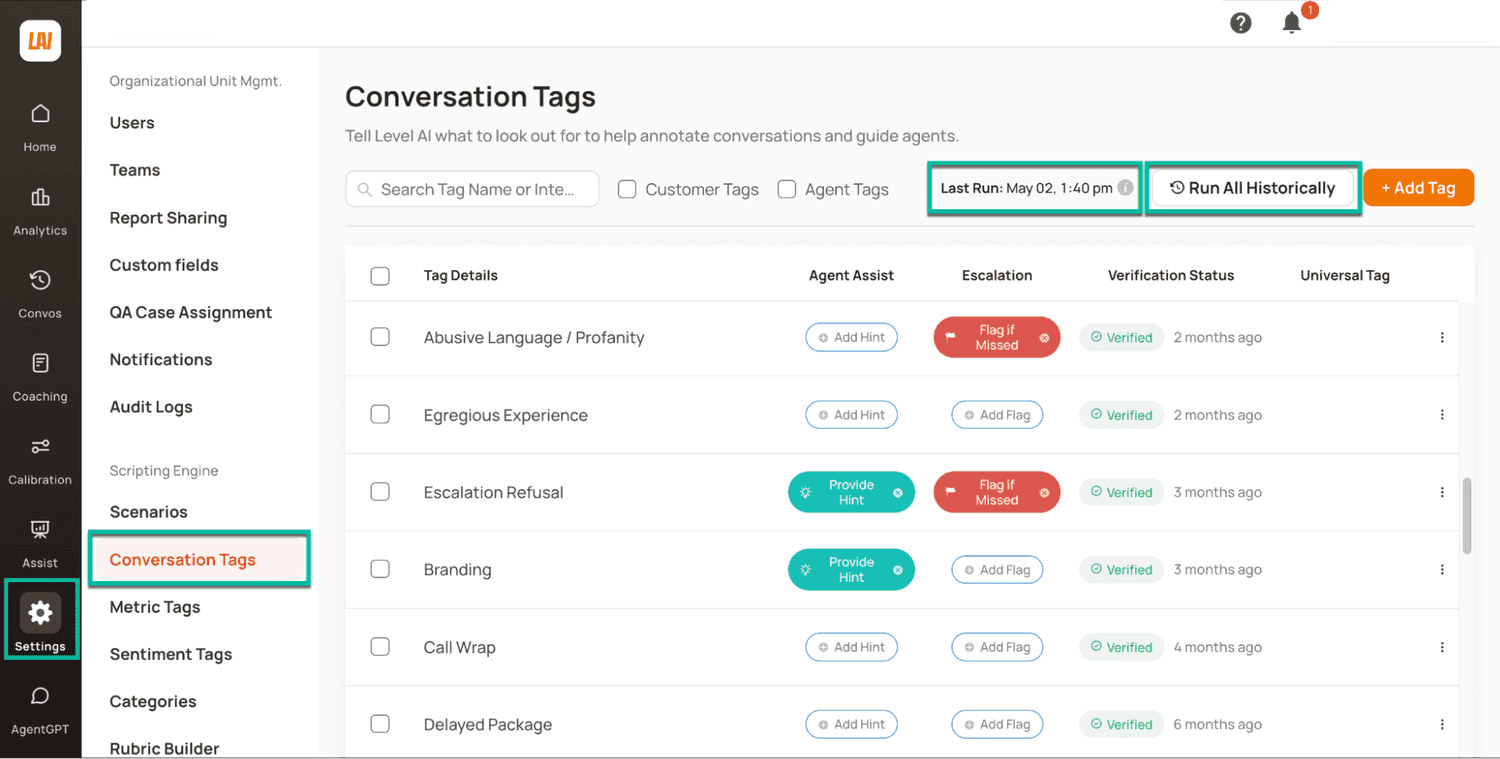
Level AI understands what customers mean, no matter how they say it, across every channel. It tags conversations with clear intents like “product setup,” “returns,” or “cancellations,” making it easy for QA teams and managers to search, filter, and analyze the interactions that matter most.
Our Scenario Engine comes with built-in intents (which we call “scenarios”) that are common across call centers, and that you can customize to your own business. This translates into more accurate data and, as a result, more precise data analysis and support for agents.
See our latest article on how to improve quality assurance in a call center.
Comprehensive sentiment analysis
Unlike competitors that simply classify sentiment as positive or negative, Level AI detects specific emotions (anger, disapproval, disappointment, annoyance, worry, happiness, admiration, gratitude) and provides a nuanced Sentiment Score that captures the intensity of customer feelings and takes into account how those feelings change throughout the call.
Those sentiment shifts are also reflected in the Sentiment Score: changes occurring at the end of the call are weighted heavier than earlier shifts, since they’ll have a bigger impact on customer satisfaction:
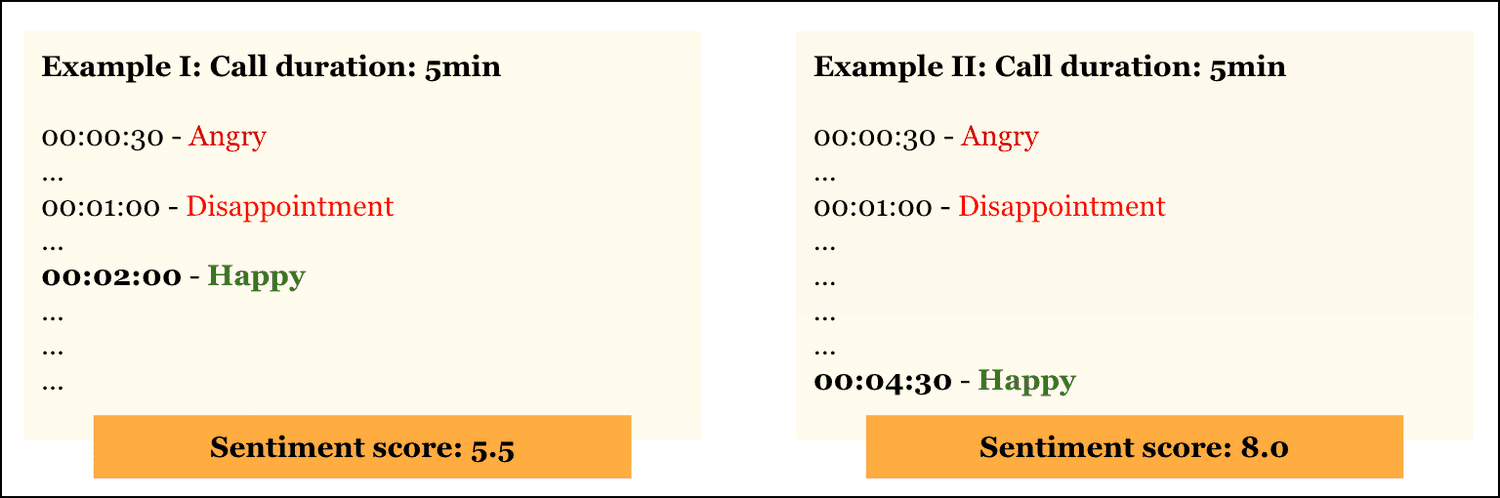
This is in contrast to status quo systems that only label calls as “positive” or “negative,” which miss all the nuance. Level AI’s customer sentiment analysis goes deeper, spotting emotions like anger, worry, or gratitude, so you actually understand how a customer feels.
That matters. If someone sounds disappointed instead of annoyed, it changes how you follow up: maybe it’s a product issue, not an agent problem. These emotional insights help teams solve issues faster, coach agents better, and catch trends early.
Automated performance scoring
One of the most helpful AI use cases in a call center is automated quality assessment. Having AI conduct the initial evaluation helps QA teams only spend time on the calls that aren’t following best practices or aren’t solving customer issues correctly. This wasn’t possible just a few years ago, but since AI can understand natural language so well, it now is.
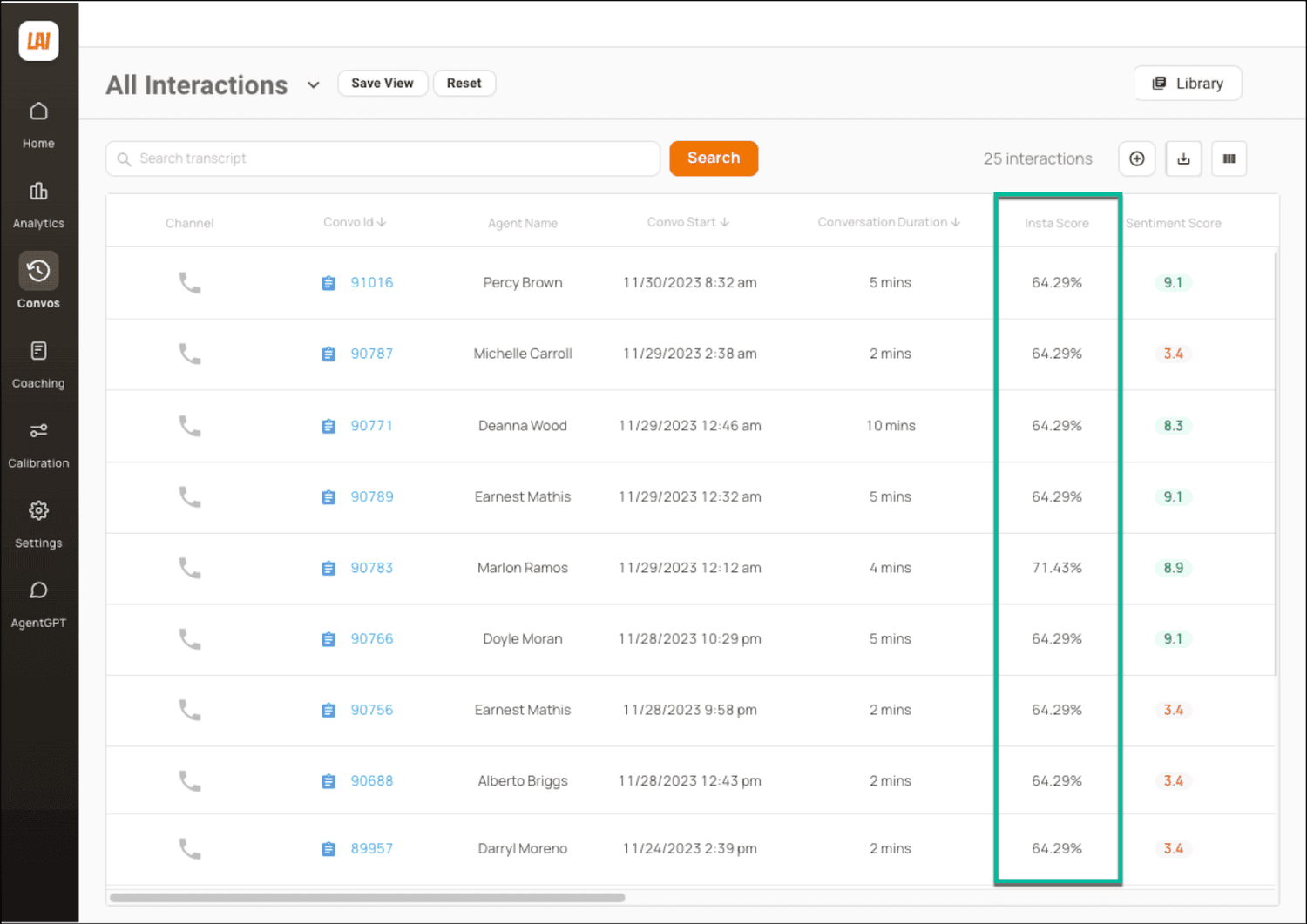
In Level AI, InstaScore automatically listens to all calls or reads all agent-customer interactions and rates agent performance against predefined rubrics and expresses these as a percentage score, providing consistent, objective evaluation for all interactions and highlighting areas for coaching and improvement.
This, in turn, can inform group and individual coaching initiatives, as well as onboarding training for new agents.
Real-time support for agents & managers
While onboarding and ongoing training is important for improving customer satisfaction, sometimes agents need additional support during calls, especially if they’re handling complex queries.
Even experienced agents juggle multiple tasks during calls, which makes it hard for them to quickly identify the right approach when they search through reference information. This is why using AI in call center agent monitoring software to give them real-time support is another common, and important, use case.
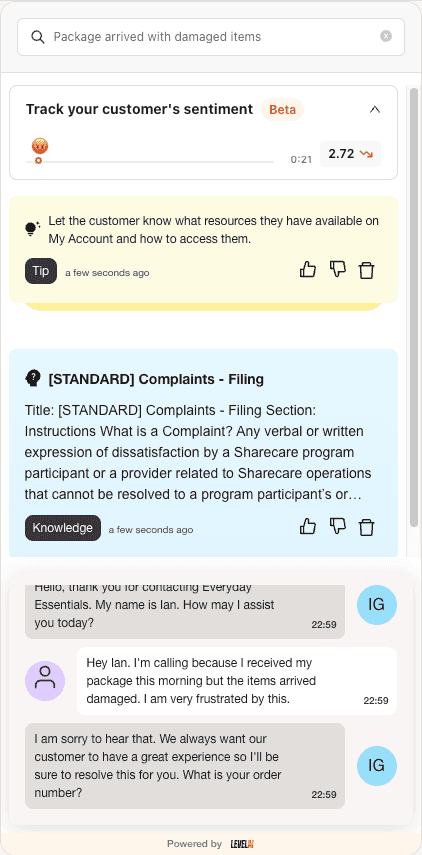
Level AI’s Real-time agent assist feature listens or reads along during a live conversation and provides contextual knowledge to agents where appropriate.
The main feed shows warnings, hints, and links to internal reference sources, like a knowledge base or help desk, which are updated as the conversation progresses.
Another feature that helps agents find relevant information faster is AgentGPT, an AI-powered chat system that proactively auto-fills the feed’s search bar with topics relevant to the conversation and is embedded in real-time agent assist:
That said, sometimes live support for agents isn’t enough. There are situations where agents need help from managers to prevent customer churn or to de-escalate a call with an angry customer.
In those cases, many customer support platforms alert managers about calls where agents may need assistance. However, most of them rely on the duration of the call as the main indicator of potential issues. Inevitably, this means both false positives (e.g., long conversations where customers are pretty happy with the interaction), and false negatives, e.g., calls where agents needed manager support, but didn’t get it.
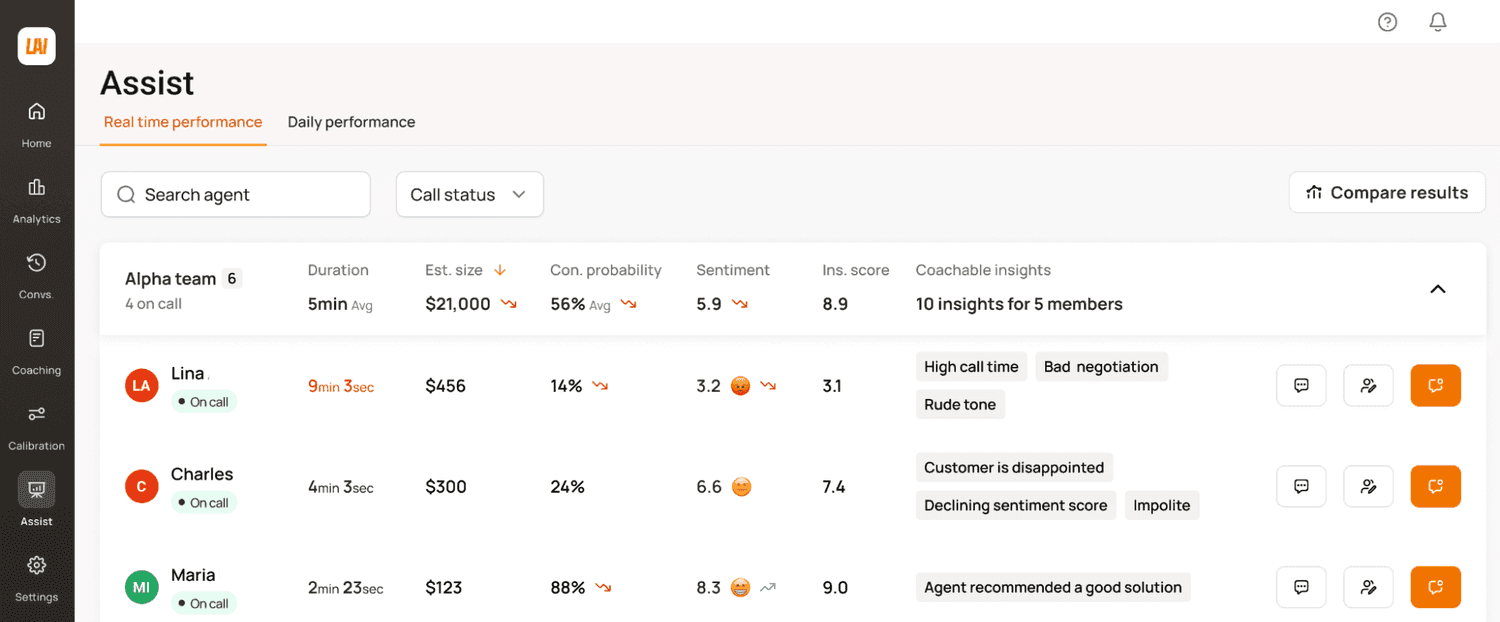
Real-time manager assist gives supervisors a more effective way to stay on top of live conversations. Instead of relying solely on call length as a signal, Level AI alerts managers to calls that may require their attention based on a broader set of indicators such as customer sentiment or InstaScore.
Supervisors can view live dashboards, monitor key metrics, and quickly review AI-generated call highlights to understand what’s happening in real time. This allows them to intervene when necessary, using either call barging or call whispering. They can also set up alerts for notifications about at-risk calls when they don’t have their dashboard open.
See our latest article on how to monitor call center performance.
Actionable Voice of Customer insights
Getting a full picture of customer interactions and deriving actionable insights from them can be a challenge for customer service teams.
Surveys, while a valuable source of customer feedback, inevitably create a delay in identifying problems that affect customer satisfaction. They may also miss less visible opportunities for improving customer experience. For example, customers may not mention issues that they don’t feel strongly about (like seasonal wait times), even if resolving them could potentially lead to better outcomes.
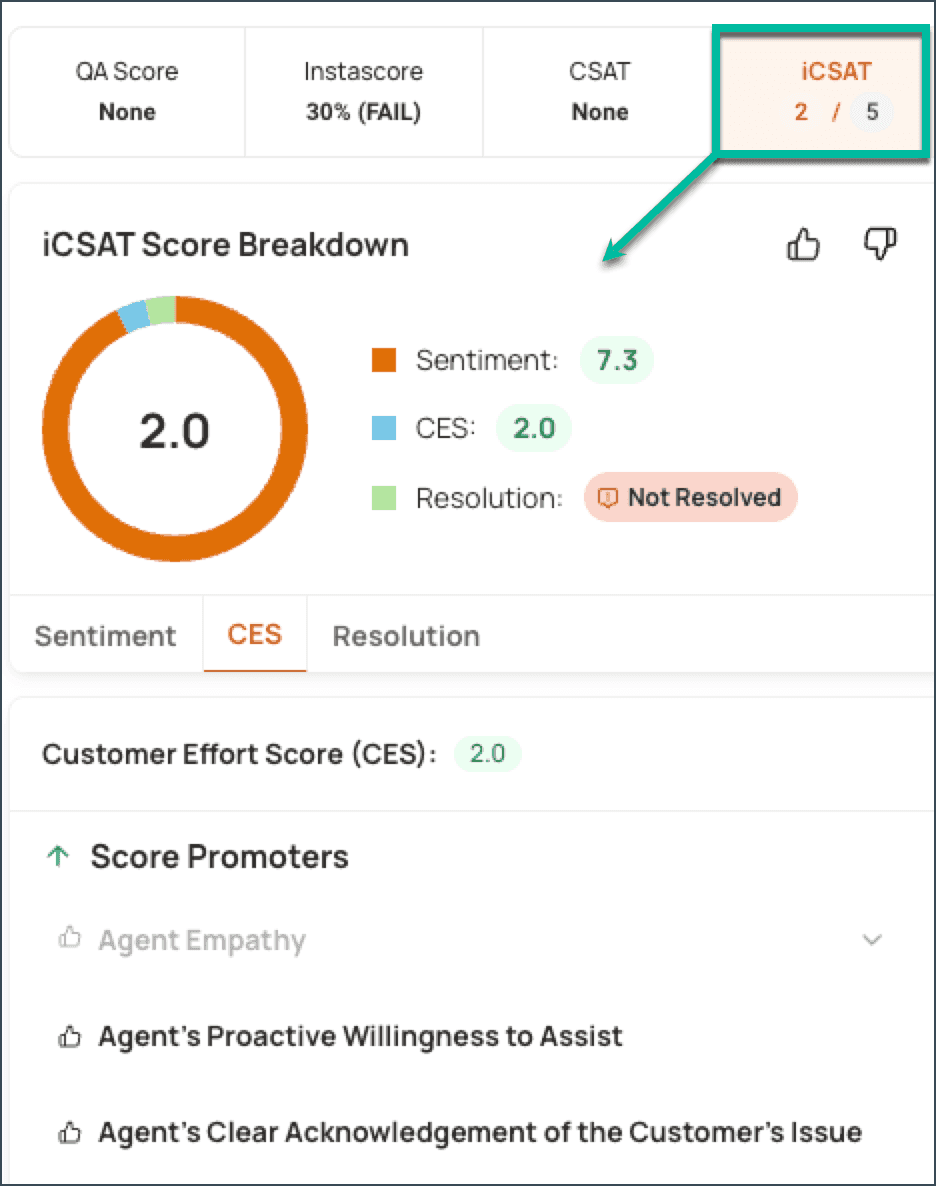
With AI tools, call centers don’t have to depend on survey response data to understand what affects customer satisfaction and find opportunities to improve it. For example, Level AI automatically assigns an inferred CSAT score, or iCSAT, to every call.
This is based on the Sentiment Score, the Resolution Score (i.e., whether or not the issue was completely resolved), and the Customer Effort Score (i.e., how much effort went into getting their issue solved. For example, waiting on hold for a long time or being transferred to a different agent).
iCSAT gives you a real-time, data-driven view of customer satisfaction across the conversation, helping you identify problem areas, improve agent performance, and make smarter decisions without waiting for survey results.
Besides iCSAT, Level AI also derives standard customer satisfaction scores like CSAT, NPS, and CES from customer conversations, and tracks additional trends in customer queries and metrics through its Voice of the Customer dashboard:
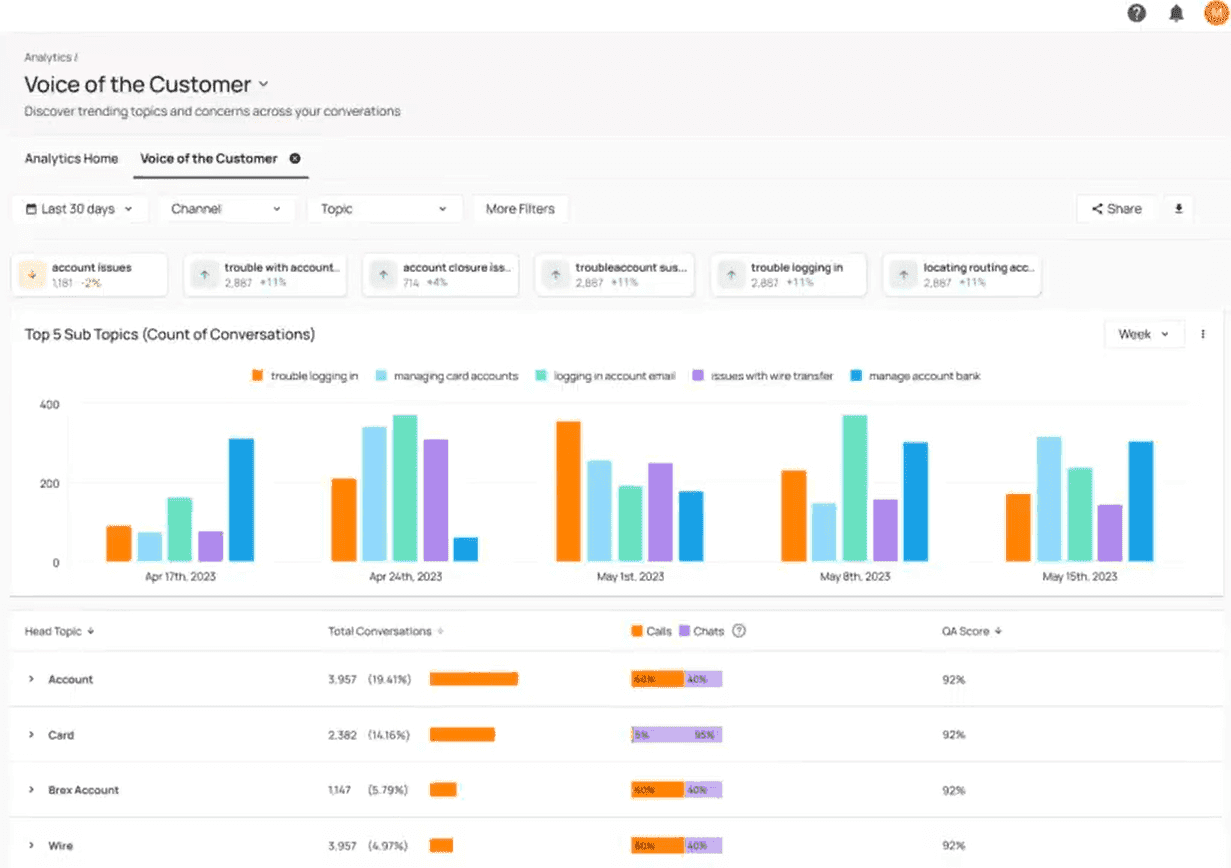
Our Voice of the Customer tools track and uncover trends and patterns such as:
A surge of queries on a specific topic, such as UX issues, after a product update.
Complaints about the attire quality after switching to a new supplier.
Unexpected issues due to system glitches, such as check-out flows or payment issues.
This lets you address unexpected events as soon as they’re detected and make better-informed decisions about improving CX and service quality for specific query topics.
To make call analysis easier, managers can also create custom reports and dashboards through our Query Builder.
As opposed to platforms that only support access to certain data types, like call transcript data, Level AI allows users to integrate data from CRMs, business intelligence tools, LMS tools, and more.
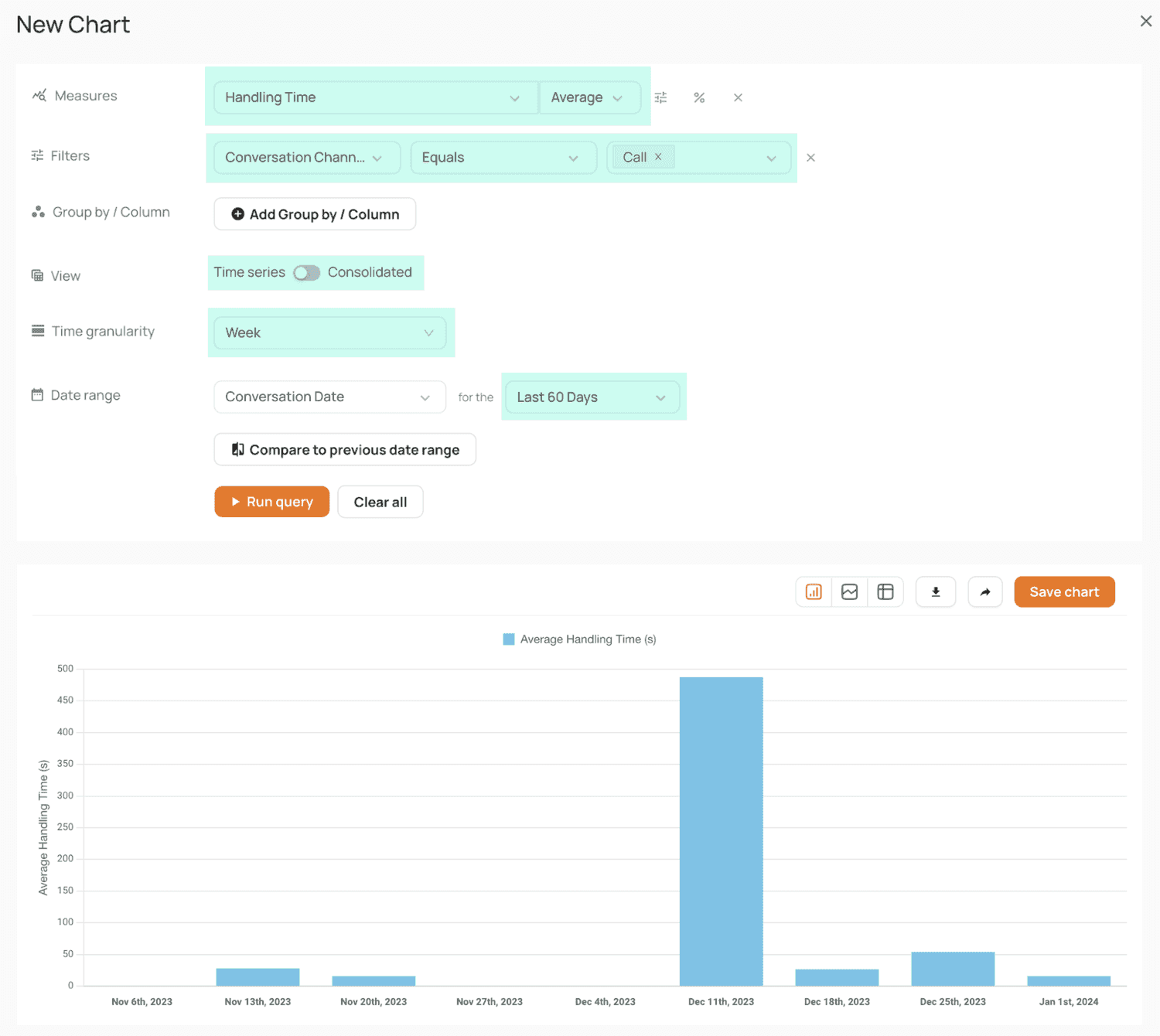
Our flexible reporting can help customer support teams diagnose and resolve a wide variety of issues, such as improving NPS or decreasing average call handling time.
Below, we’ll discuss some real-life examples that showcase benefits of AI for call centers, including the ability to reduce call volume at peak times, shorten wait time and cut costs.
Examples of using Level AI to drive business outcomes
Faster call handling and response during peak demand hours
ezCater, a popular food tech platform for workplaces, manages time-sensitive complex orders between businesses and restaurants.
The company needed a way to help agents handle customer calls quickly and efficiently during peak lunch hours: at the time, newer team members were struggling with quickly finding relevant information across 1,000+ knowledge base articles.
By combining Real-Time Agent Assist and Real-Time Manager Assist, as well as implementing our platform’s features for automated QA, ezCater was able to accomplish that goal.
Real-Time Agent Assist sped up information retrieval for agents, while Real-Time Manager Assist helped supervisors identify problematic calls and provide proactive support to agents.
As a result, ezCater was able to decrease overall call handling time by 13%, and achieve a 23% reduction in call hold time during peak lunch hours, with 94% of calls served within 30 seconds.
Reducing peak call volume through efficient call deflection
A prominent buy-now-pay-later provider was looking for ways to reduce the volume of customer calls during Black Friday call volume spikes.
Without finding a way to deflect the calls, the company would have needed 2,000+ additional agents to provide the required level of support during that time.
Instead of hiring a huge team of temporary agents, they used Level AI’s VoC Insights to analyze, quantify, and categorize customer priorities and concerns expressed in customer conversations. Based on that information, the company identified gaps in their service bot functionality and expanded available options to cover common queries and deflect more calls.
Due to those changes, call volume during peak times increased by only 6% rather than the usual 150%, with an estimated 500,000 calls deflected to the self-service bot.
In addition to reducing call volume, this change also led to an improved customer experience during peak times compared to previous years. Before the change, agents had to handle multiple calls simultaneously, leading to interrupted conversations and extended wait times.
With most calls getting deflected, agents were able to provide faster response and resolution times, which led to higher customer satisfaction.
Reducing the number of unwarranted refunds
Sometimes agents use credits and refunds as the simplest way to deescalate customer conversations, rather than follow company policies. This was the case for a multinational design and marketing firm, where an internal audit revealed that 30% of refunds provided to customers were unwarranted.
The leadership realized they needed to train agents to follow de-escalation processes to reduce that number.
After standardizing de-escalation protocols across all customer support centers, the QA team used Level AI to monitor conversations and identify agents and teams that didn’t follow company procedures.
Training agents on protocols led to both a decrease in the number of refunds, resulting in cost savings of over $30M within the first year of the engagement, and an improvement in the quality of customer service overall, driving a 47% increase in customer satisfaction score.
For a first look at our platform, schedule your demo today to see how you can use Level AI to improve CSAT, reduce churn, and increase call center efficiency.
2. Zendesk: Best for CS workforce management
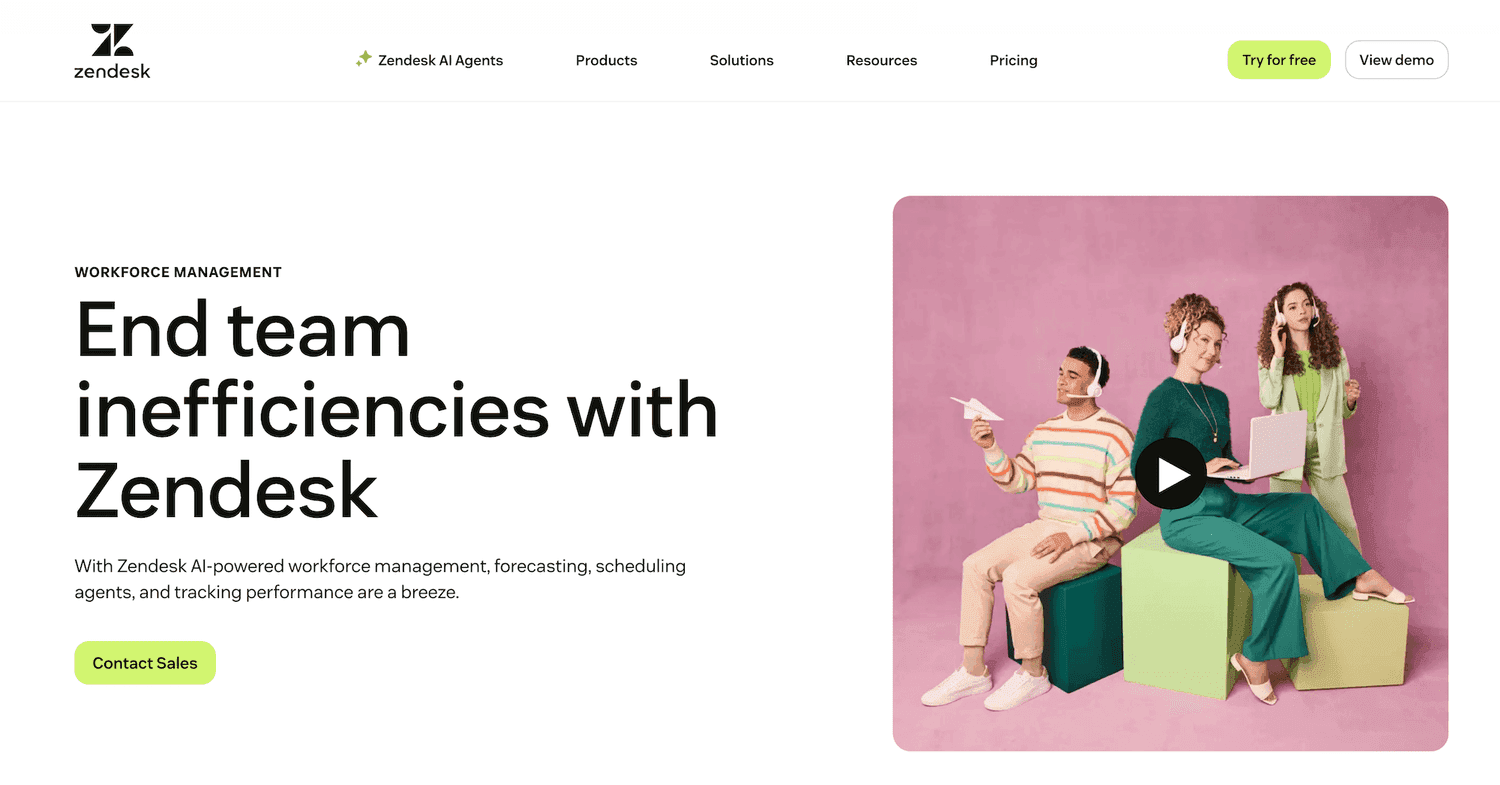
Zendesk is an AI-driven customer support platform that streamlines support operations and handles customer inquiries and agent scheduling. Its key features include:
Conversational AI agents for cross-channel query resolution.
A centralized agent workspace for voice and messaging, including group messaging capabilities and routing.
Workforce management and work force forecasting tools based on historical data.
Zendesk plans start with a basic Support Team plan offering automations and pre-built analytics at $19 per month per agent, when billed annually. However, Zendesk AI agents are offered only on the higher-tier plans: Suite Team and Suite Professional, starting at $55 and $115 respectively (also billed annually, per user per month).
3. Intercom: best for no-code AI customer service workflows
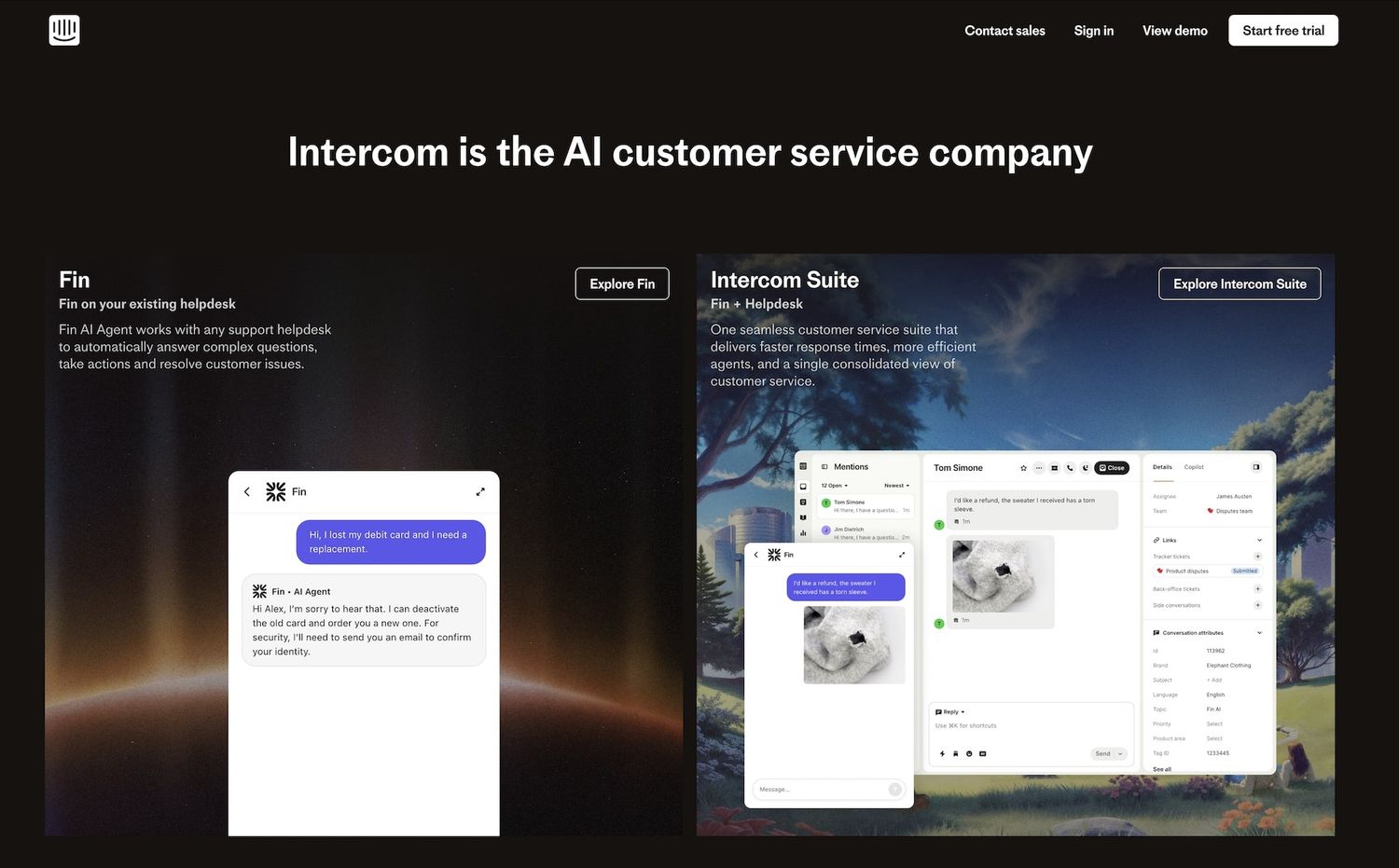
Intercom offers standard features, including omnichannel messaging, automations for routine tasks, and agent support.
Its key features are focused on reducing agent workload and speeding up response times:
AI-powered response drafts with customizable settings for pulling in customer data.
Ability to find multiple tickets with the same issue and resolve them in bulk via a single ticket.
No-code automation workflows to connect Intercom to 450+ apps, including ability to deploy pre-built templates for service triage, onboarding, and CSAT surveys.
Intercom pricing starts at $29 per seat per month, billed annually.
Using Intercom’s Fin AI assistant is not included in the plan pricing. Instead, it’s billed separately at $0.99 per resolution.
4. Freshdesk: best for cross-channel AI bot deployment
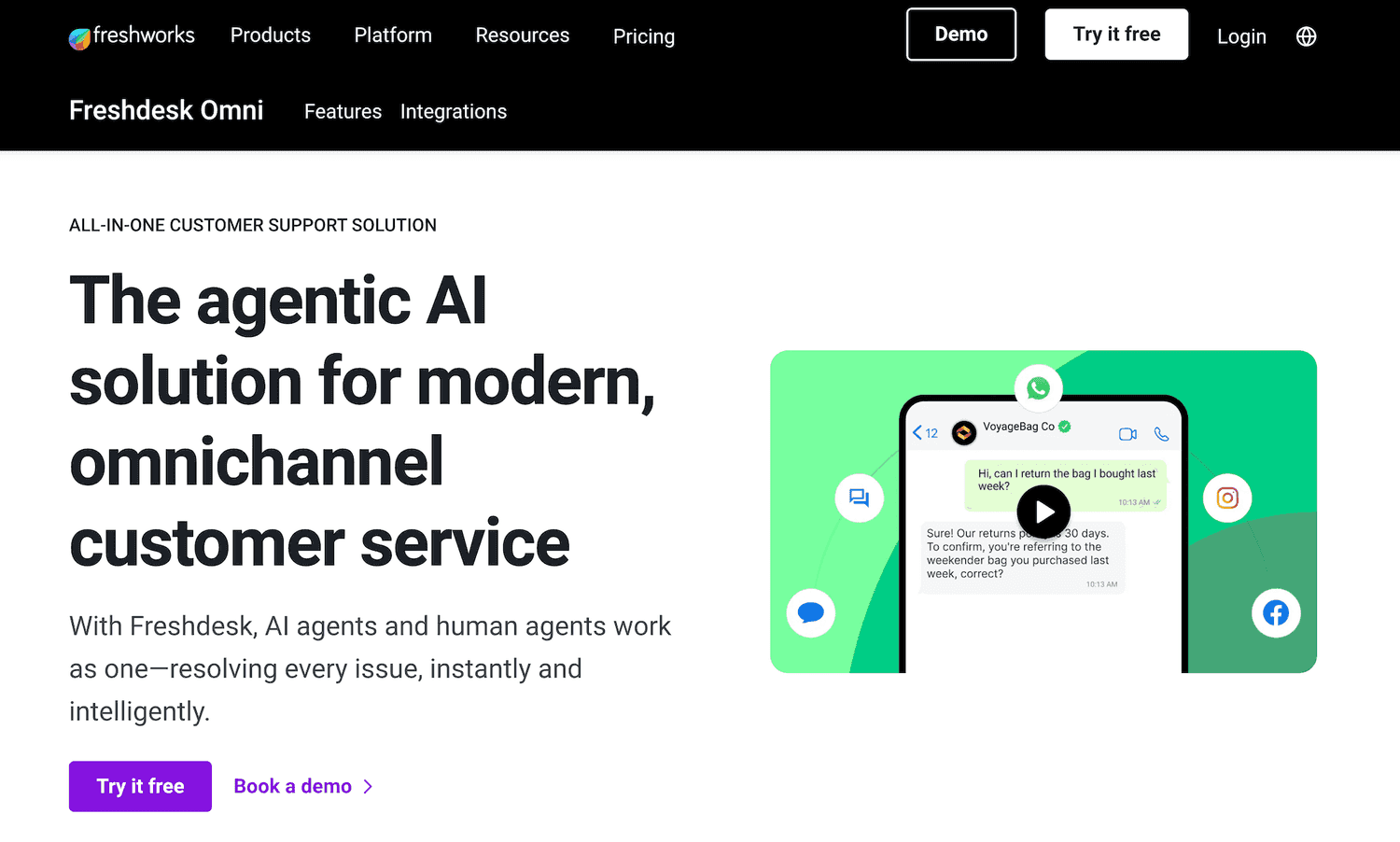
Freshdesk offers several options for customer support teams that want to start using GenAI to support their agents.
In addition to Freshdesk Omni with cross-channel agent support, Freshdesk provides access to the Freddy AI agent that has additional capabilities. Here are some of the features worth mentioning:
Summarization of customer questions and AI-generated response drafts.
Automated prioritization for support tickets.
Cross-channel GenAI responses via chats and through social media channels, without human support.
Freshdesk Omni plans start at $29 per agent per month, billed annually. Freddy AI Agent support is available at $100 per 100 sessions.
Just like Intercom, Freshworks doesn’t offer an all-included pricing model. Freddy AI capabilities need to be purchased separately, with higher-tier plans unlocking access to Freddy AI analytics and copilot capabilities.
5. Salesforce: best for survey feedback gathering and management
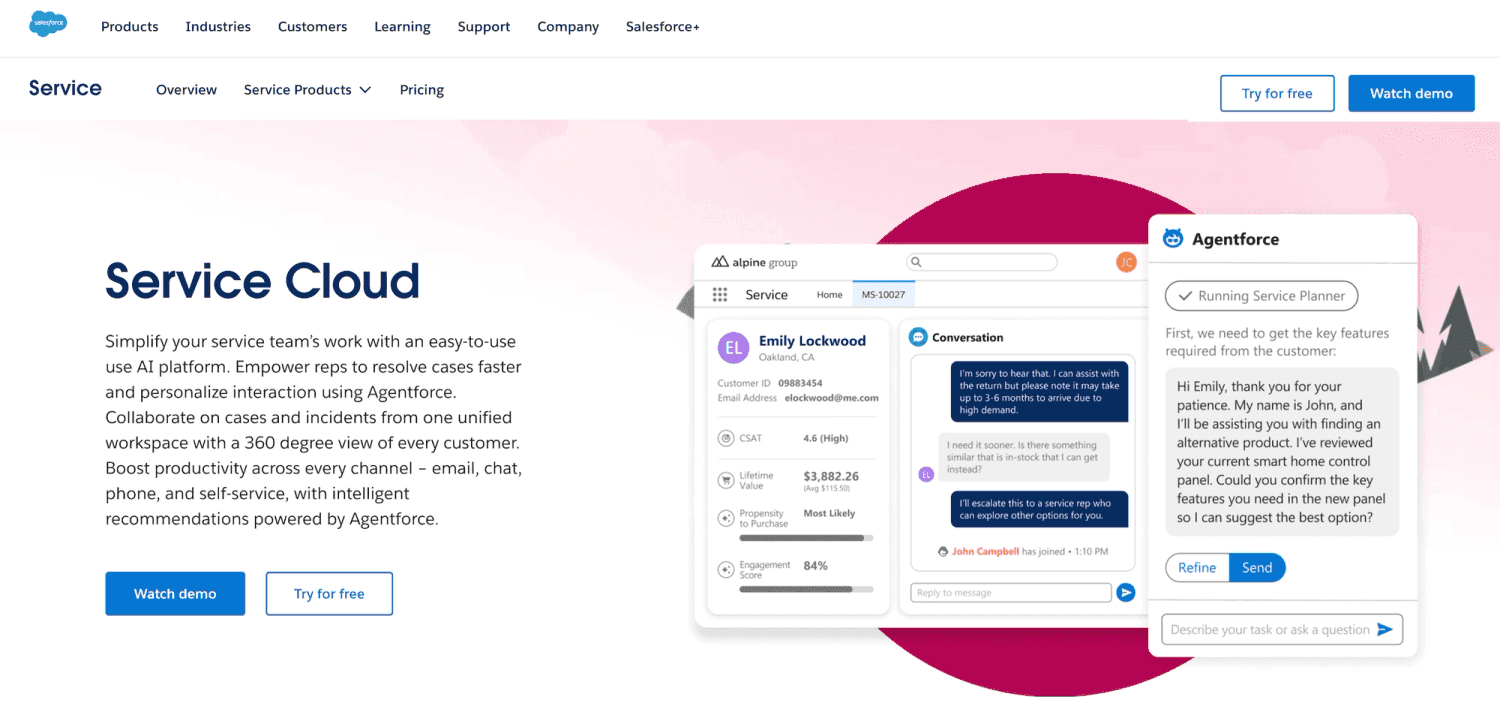
In addition to supporting agents and taking over simpler queries, Salesforce’s platform for customer service teams also makes it easier to deflect calls through custom bots.
It also allows customer service teams to survey customers through a built-in AI-powered survey feature that includes the following:
Survey builder to develop surveys based on AI recommendations.
Customer lifecycle maps to understand the customer journey and automate feedback gathering at key points.
Analytics dashboards to sort feedback by location, industry, and so on.
Salesforce pricing is designed to closely match customer needs depending on the industry. To build a plan, you’ll need to follow a number of steps:
First, you need to select one of the Service Cloud Plan options, starting at $25 per user per month, billed monthly or annually.
Then, you’ll need to pick add-ons, such as Field Service packages, Einstein AI agent, cloud telephony and so on.
After that, you’ll need to choose the desired support level, from self-guided support included in all plans to premier and custom plans.
6. Help Scout: best for AI-supported messaging
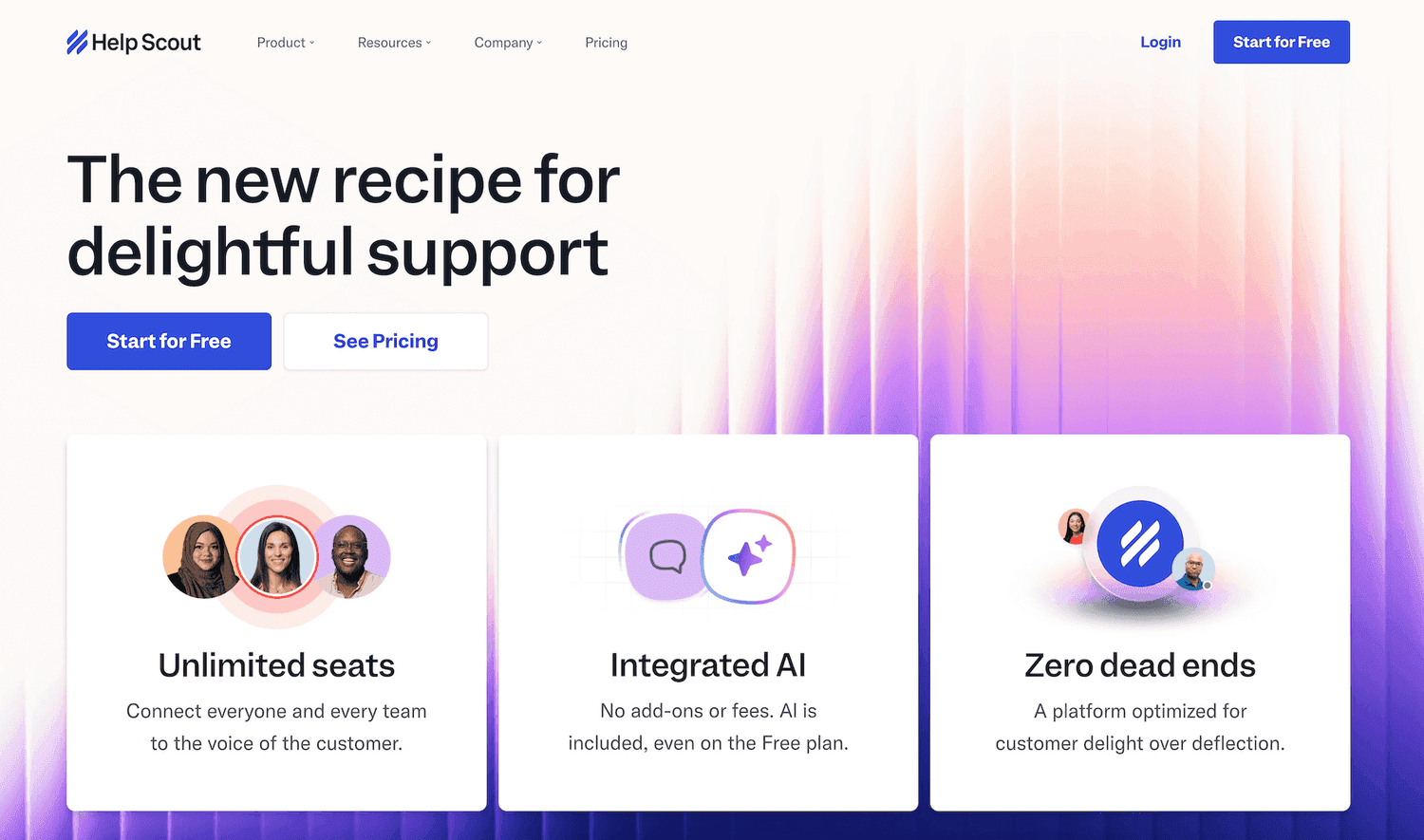
Help Scout is built for teams that primarily use messaging to communicate with customers. Most of its AI capabilities are focused on making it easier to respond to text-based queries via customer service tools. Help Scout key features include:
A shared workspace that supports multiple channels and can help prioritize incoming messages, as well as to draft and personalize responses.
Messaging capabilities that include banners, chat modals, and surveys for announcements, customer support, and surveys.
A self-service chat builder for website and in-app deployment.
Help Scout has a straightforward pricing model that includes AI message drafts and AI chatbot in all plans, including their free plan.
Small companies that get less than 50 customer contacts per month can stay on the Help Scout free plan with unlimited users. Paid plans start at $50 per month (also with unlimited users) and support 100 and more contacts per month.
7. Tidio
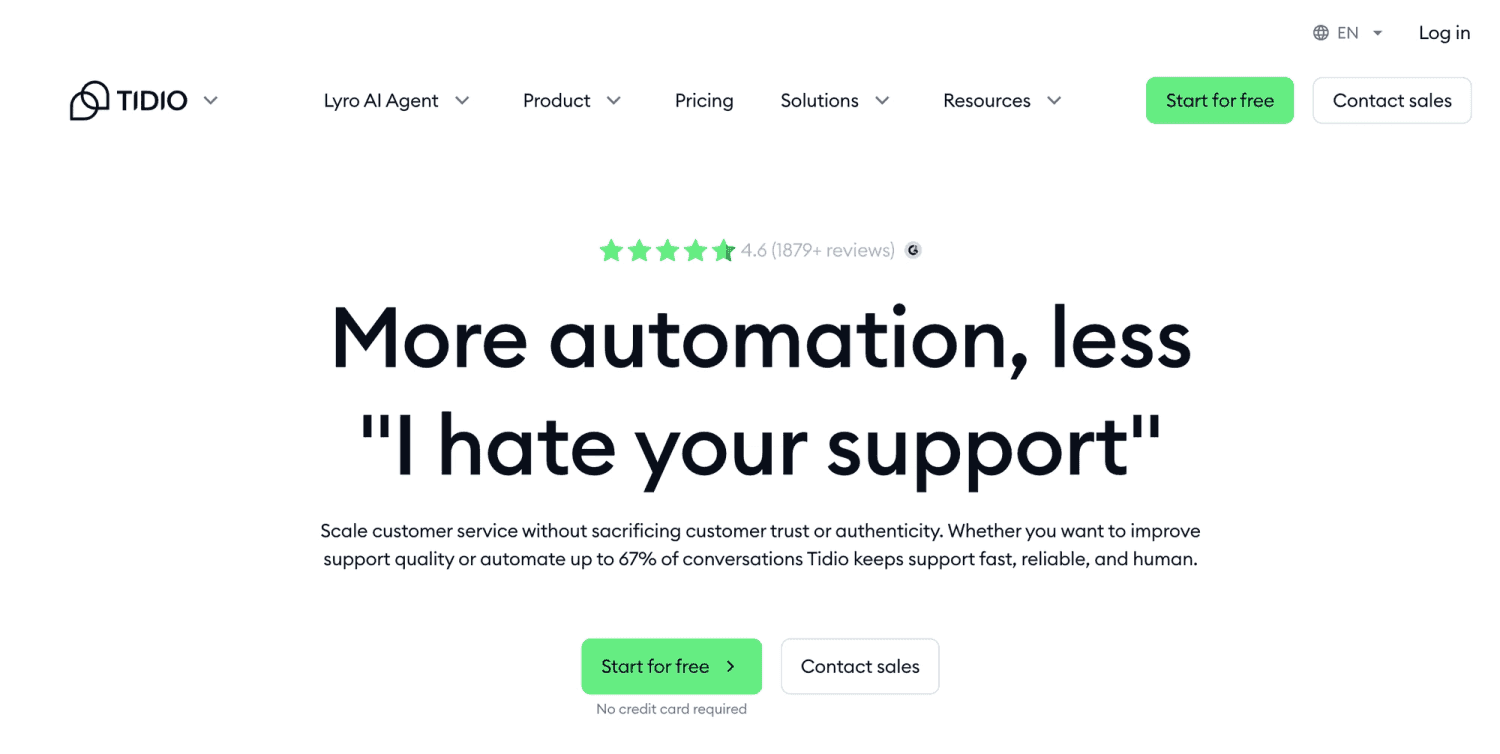
Tidio is an AI customer service platform that combines live chat, chatbots, and a help desk into one affordable solution. Its Lyro AI agent is designed to handle customer conversations autonomously, making it a popular choice for small businesses and growing e-commerce brands that need quick deployment without a heavy enterprise price tag.
Key features:
Lyro AI agent that resolves up to 70% of common customer questions autonomously
Pre-built chatbot templates for e-commerce, lead generation, and FAQs
Multichannel support across live chat, email, Instagram, and Messenger
Native integrations with Shopify, WordPress, and other major platforms
Visitor tracking and proactive chat triggers based on browsing behavior
Best for: Small businesses, startups, and SMB ecommerce brands handling under 500 tickets per month that need an affordable, easy-to-deploy AI support tool.
Outcome example: Tidio users frequently report deploying Lyro within hours rather than weeks, with measurable ticket deflection on repetitive queries like shipping status, return policies, and product availability, all without requiring a dedicated implementation team.
Wrapping up: the power of AI tools for customer support
Level AI’s customer intelligence platform helps ensure call center quality assurance best practices, improve agent performance, and enhance the overall customer experience through AI-powered call analysis and real-time team member support.
Schedule a demo to see how Level AI can help your team achieve its business goals.
Frequently asked questions
Q1. What are the top AI tools for enhancing customer support, and which AI solutions are best for improving customer experience?
A. The top AI tools for enhancing customer support combine automation, real-time intelligence, and analytics into a single platform. Level AI's full-stack AI platform, along with others featured in the article, helps businesses improve customer experience by delivering AI-powered agent assist, automated quality assurance, voice-of-customer insights, and intelligent virtual agents. The best AI solutions for improving customer experience are those that integrate seamlessly with your existing CRM and helpdesk stack via robust integrations, support both voice and digital channels, and provide measurable improvements in CSAT, first-contact resolution, and average handle time (AHT).
Q2. Which AI tools can help automate customer service tasks and reduce response time?
A. AI-powered customer support tools that automate conversations and reduce response time typically include AI virtual agents, conversational chatbots, agent assist platforms, and automated ticket routing systems. Tools like Level AI's AI Virtual Agent and Agent Assist automate repetitive queries, surface real-time answers from knowledge bases, and handle Tier 1 conversations end-to-end, making them especially powerful for contact center leaders looking to scale support operations. This frees human agents to focus on complex, high-value interactions, dramatically cutting response times and improving overall efficiency.
Q3. What generative AI tools are best for automating customer service, and what is the best AI virtual assistant software for customer support?
A. The best generative AI tools for automating customer service are purpose-built for contact centers rather than generic LLM wrappers. Level AI's AgentGPT and AI Virtual Agent are leading examples of best-in-class AI virtual assistant software for customer support, offering human-quality conversations, deep integration with business systems, and the ability to resolve customer issues autonomously. Gen AI, powered by an underlying voice AI platform and automatic speech recognition engine, also enables automated summarization, response drafting, and after-call work, making agents significantly more productive.
Q4. What are the best AI tools for customer service operations teams and the best platforms for AI-led escalation handling?
A. For customer service operations teams, the best AI tools are those that provide visibility and control across the entire support function, including automated QA, real-time agent coaching, agent screen recording, and analytics. Level AI stands out as a top platform for AI-led escalation handling because it detects sentiment shifts, compliance risks, and escalation triggers in real time through iCSAT and proactive regulatory compliance monitoring, alerting supervisors before issues spiral. This proactive approach helps CX leaders reduce churn, ensure compliance, and maintain consistent service quality.
Q5. What is the importance and benefit of a customer support tool, and are these tools only for external customer interactions?
A. A customer support tool is critical because it centralizes interactions, automates repetitive work, and gives teams the data they need to continuously improve CX, as demonstrated across industries like financial services, healthcare, retail, and BPO. The benefits include faster response times, higher CSAT, better agent productivity, 100% interaction coverage (vs. the 1–2% achievable with manual QA), and stronger compliance. Importantly, AI-powered customer support tools are not limited to external customer platforms; they also support internal use cases such as agent coaching, training, sales performance enablement, and cross-team knowledge sharing, making them valuable across the entire organization.
continue reading
Related articles

Subscribe to Ctrl+CX
Hear insights directly from Rob Dwyer, Level AI's CX Executive in Residence
" transform="translate(247.297 0)" width="197.82796686746997px"/><path d="M 170.627 0 C 171.353 0 172.122 0.325 172.939 1.064 C 173.761 1.807 174.601 2.942 175.447 4.484 C 177.139 7.567 178.793 12.158 180.378 18.127 C 183.546 30.056 186.405 47.348 188.809 68.751 C 193.617 111.549 196.592 170.691 196.592 236.029 C 196.592 301.367 193.617 360.509 188.809 403.307 C 186.405 424.709 183.546 442.002 180.378 453.931 C 178.793 459.9 177.139 464.49 175.447 467.574 C 174.601 469.116 173.761 470.251 172.939 470.993 C 172.122 471.733 171.353 472.058 170.627 472.058 C 169.901 472.058 169.131 471.733 168.314 470.993 C 167.492 470.251 166.652 469.116 165.806 467.574 C 164.113 464.49 162.461 459.9 160.876 453.931 C 157.708 442.002 154.848 424.709 152.444 403.307 C 147.637 360.509 144.662 301.367 144.662 236.029 C 144.662 170.691 147.637 111.549 152.444 68.752 C 154.848 47.348 157.708 30.056 160.876 18.127 C 162.461 12.158 164.113 7.568 165.806 4.484 C 166.652 2.942 167.492 1.807 168.314 1.064 C 169.131 0.325 169.901 0 170.627 0 Z M 71.713 0 C 62.009 0 52.656 6.435 44.052 18.342 C 35.457 30.238 27.69 47.491 21.156 68.871 C 8.091 111.621 0 170.721 0 236.029 C 0 301.337 8.091 360.436 21.156 403.187 C 27.69 424.566 35.457 441.82 44.052 453.715 C 52.656 465.623 62.009 472.058 71.713 472.058 C 81.416 472.058 90.77 465.623 99.373 453.715 C 107.969 441.82 115.736 424.566 122.269 403.187 C 135.334 360.436 143.425 301.337 143.425 236.029 C 143.425 170.721 135.334 111.621 122.269 68.871 C 115.736 47.492 107.969 30.238 99.373 18.342 C 90.77 6.435 81.416 0 71.713 0 Z" fill="transparent" height="472.05786706056097px" id="AtqcuIS6E" stroke-dasharray="" stroke-linecap="butt" stroke-linejoin="miter" stroke-miterlimit="10" stroke-width="1.845" stroke="rgb(146, 146, 146)" transform="translate(102.538 0)" width="196.59214365028447px"/><path d="M 123.024 0 C 89.215 0 58.469 26.24 36.139 68.983 C 13.822 111.702 0 170.76 0 236.029 C 0 301.298 13.822 360.356 36.139 403.075 C 58.469 445.817 89.215 472.058 123.024 472.058 C 156.834 472.058 187.58 445.817 209.91 403.075 C 232.226 360.356 246.048 301.298 246.049 236.029 C 246.049 170.76 232.226 111.702 209.91 68.983 C 187.58 26.24 156.834 0 123.024 0 Z" fill="transparent" height="472.05786706056097px" id="nKu1rpt6g" stroke-dasharray="" stroke-linecap="butt" stroke-linejoin="miter" stroke-miterlimit="10" stroke-width="1.845" stroke="rgb(146, 146, 146)" width="246.04881024096358px"/><path d="M 0 6.691 C 0 2.996 2.88 0 6.432 0 C 9.984 0 12.863 2.996 12.863 6.691 C 12.863 10.386 9.984 13.382 6.432 13.382 C 2.88 13.382 0 10.386 0 6.691 Z" fill="rgb(254, 80, 0)" height="13.38193205317657px" id="qx6powAle" transform="translate(423.219 103.185)" width="12.863448795180375px"/><path d="M 0 6.691 C 0 2.996 2.88 0 6.432 0 C 9.984 0 12.863 2.996 12.863 6.691 C 12.863 10.386 9.984 13.382 6.432 13.382 C 2.88 13.382 0 10.386 0 6.691 Z" fill="rgb(254, 80, 0)" height="13.38193205317657px" id="NK9e8zC6o" transform="translate(293.204 255.173)" width="12.86344879517992px"/><path d="M 0 6.691 C 0 2.996 2.88 0 6.432 0 C 9.984 0 12.863 2.996 12.863 6.691 C 12.863 10.386 9.984 13.382 6.432 13.382 C 2.88 13.382 0 10.386 0 6.691 Z" fill="rgb(254, 80, 0)" height="13.38193205317657px" id="GMpYPNX_6" transform="translate(427.575 329.773)" width="12.863448795180375px"/><path d="M 0 6.691 C 0 2.996 2.88 0 6.432 0 C 9.984 0 12.863 2.996 12.863 6.691 C 12.863 10.386 9.984 13.382 6.432 13.382 C 2.88 13.382 0 10.386 0 6.691 Z" fill="rgb(254, 80, 0)" height="13.38193205317657px" id="xEa1_xTe3" transform="translate(99.187 154.777)" width="12.863448795180375px"/><path d="M 0 6.691 C 0 2.996 2.88 0 6.432 0 C 9.984 0 12.863 2.996 12.863 6.691 C 12.863 10.386 9.984 13.382 6.432 13.382 C 2.88 13.382 0 10.386 0 6.691 Z" fill="rgb(254, 80, 0)" height="13.38193205317475px" id="RVMs3MQ2J" transform="translate(111.25 382.759)" width="12.863448795181284px"/><path d="M 0 6.691 C 0 2.996 2.88 0 6.432 0 C 9.984 0 12.863 2.996 12.863 6.691 C 12.863 10.386 9.984 13.382 6.432 13.382 C 2.88 13.382 0 10.386 0 6.691 Z" fill="rgb(254, 80, 0)" height="13.381932053172932px" id="ka1rTUarQ" transform="translate(28.818 63.445)" width="12.863448795180375px"/></g></svg>)